Text size
DefenseNewsGlobal Security.
Strategic Insight.
Breaking News

RTX, Shield AI Partner to Add Autonomy, AI to Defense Systems

DefenseNews: RTX and Shield AI have forged a partnership that will integrate two types of Shield AI’s advanced software into selected RTX defense platforms.

RTX, ShieldAI, Hivemind, ViDAR, drone, autonomy, loitering, swarm, sensor, retrofit, weapon, NCA, targeting, defense, integration

The collaboration will bring Shield AI’s “Hivemind” artificial intelligence (AI) and autonomy stack to an undisclosed “operational weapon,” which the companies say will be the first fielded system powered by Networked Collaborative Autonomy. The companies will fund this project without government investment. 

In addition, Shield AI’s ViDAR (Visual Detection and Ranging) AI-powered sensor payload will be integrated to boost RTX’s Multi-Spectral Targeting System’s turreted electro-optical and infrared sensor capabilities against maritime and aerial drone threats.

“AI and autonomy continue to enhance the performance of our products,” said RTX Chairman and CEO Chris Calio, as the partnership aligns with the US Department of Defense’s broader push to integrate autonomy into existing weapon systems via rapid, software-based upgrades.

Meanwhile, Shield AI CEO Gary Steele noted, “This collaboration reflects how the defense ecosystem is evolving — bringing the best of autonomy and hardware to bear on national security challenges.” 

Hivemind

Hivemind is a modular and mission-agnostic AI and autonomy stack designed for unmanned systems across air, land, and sea. 

It enables “human-machine teaming,” where humans set objectives and the AI pilot executes them autonomously without constant radio contact that can be jammed or intercepted. 

Hivemind has already been tested on platforms like the V-BAT drone, General Atomics’ MQ-20 Avenger, and Lockheed Martin’s VISTA X-62A tactical aircraft, according to Breaking Defense. 

DefenseNews: DRDO Seeks Private Sector Partnership to Build Mobile Launchers for Project Kusha's Long-Range M2 and M3 Interceptors

DefenseNews: In a significant move to enhance India's air defense and promote indigenous manufacturing, the Defense Research and Development Organisation (DRDO) has invited private Indian companies to participate in the development of a Mobile Launcher System for its advanced long-range interceptor missiles.

DRDO, Kusha, M2, M3, launcher, interceptor, mobile, ERADS, BEL, partnership
The tender is specifically for the M2 and M3 missiles, which are key components of the ambitious 'Project Kusha'.

This initiative is a crucial step under the 'Atmanirbhar Bharat' policy, aiming to build a self-reliant and robust domestic defence industrial base.

The involvement of the private sector is expected to accelerate the development and production of this critical military hardware.

Project Kusha, also known as the Extended Range Air Defence System (ERADS), is India’s flagship programme to create a homegrown long-range surface-to-air missile (LRSAM) system.

It is designed to establish a multi-layered air defence shield, capable of neutralising a wide array of aerial threats far from the country's borders.

The system's mobility is vital for operational success, as truck-based launchers provide the flexibility for rapid deployment to strategic locations and increase the system's survivability against enemy attacks.


The project features a three-tiered interceptor missile system:

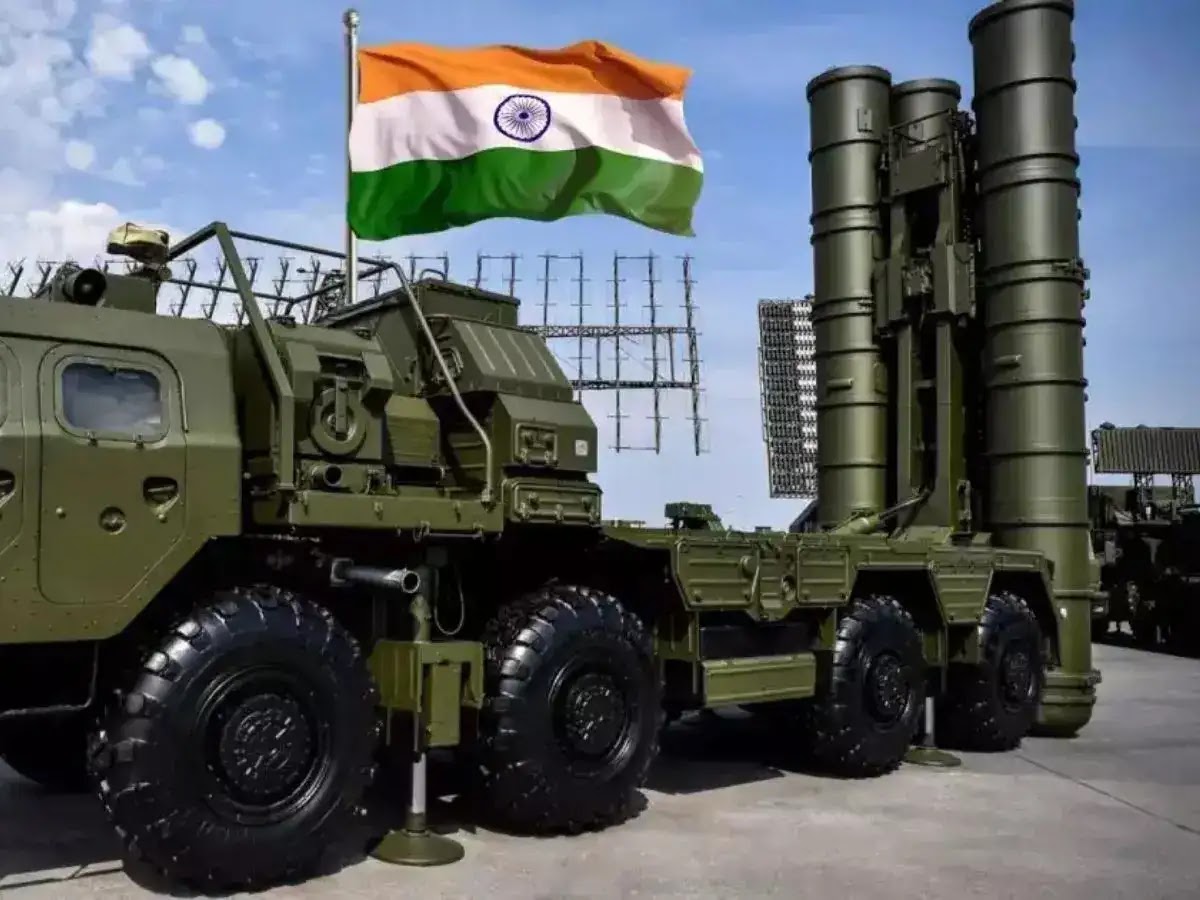
This system is being developed to strategically fill the gap between the existing Medium-Range Surface-to-Air Missile (MR-SAM), which has a range of approximately 80 km, and the imported Russian S-400 Triumf system, which can engage targets up to 400 km.

Once deployed, Project Kusha will provide the Indian Air Force (IAF) and Indian Navy with a formidable defence against sophisticated threats such as stealth fighter jets, drones, cruise missiles, and even high-speed anti-ship ballistic missiles.

The system is engineered for a high single-shot kill probability of over 80%.

DRDO, Kusha, M2, M3, launcher, interceptor, mobile, ERADS, BEL, partnership


The Cabinet Committee on Security (CCS) approved Project Kusha in May 2022. This was followed by the Ministry of Defence granting an Acceptance of Necessity (AoN) in September 2023 for the procurement of five squadrons for the IAF, at an estimated cost of ₹21,700 crore (approximately US$2.6 billion).

The development is being spearheaded by DRDO's premier laboratories, including the Defence Research and Development Laboratory (DRDL) and Research Centre Imarat (RCI), with Bharat Electronics Limited (BEL) serving as a primary development partner.

According to the project timeline, the first trials for the M1 interceptor are anticipated in September 2025, with tests for the more advanced M2 and M3 variants scheduled for 2026 and 2027, respectively.

The complete system is expected to be inducted and operational between 2028 and 2030, marking a major milestone in India's journey toward strategic defence independence.

Send us a message

Story tips, corrections, questions or advertising enquiries: fill in the form and our team will reply by e-mail.

Newsletter

Stay Updated with Defense News

Get breaking defense and security news, analysis and exclusive reports delivered straight to your inbox.

Contact the newsroom

Have a defense story or an update to report?

Send us a news tip, a correction or a press release. Every message is read by our desk.