Text size
DefenseNewsGlobal Security.
Strategic Insight.
Breaking News

North Korea Vows to Expand Nuclear Forces

North Korea vows to expand its nuclear arsenal, citing growing U.S.-led military pressure and deepening regional security cooperation.

North Korean Vice Defense Minister Kim Kang Il speaking at the Beijing Xiangshan Forum, with military imagery and missiles in the background.
North Korean Vice Defense Minister Kim Kang Il speaks at the Beijing Xiangshan Forum amid heightened attention over Pyongyang’s expanding nuclear and missile capabilities.

North Korea has renewed its commitment to expanding its nuclear forces, saying the growing U.S.-led military buildup and closer security cooperation between Washington, Seoul and Tokyo justify strengthening its nuclear deterrent. The statement was delivered by North Korean Vice Defense Minister Kim Kang Il at the Beijing Xiangshan Forum on September 17, adding to concerns over the future of nuclear security on the Korean Peninsula.

Pyongyang Says Its Nuclear Forces Will Continue to Grow

Kim Kang Il said North Korea would continue strengthening its nuclear capabilities, arguing that the military environment surrounding the country requires Pyongyang to maintain and expand its strategic deterrent. His remarks specifically criticized growing military cooperation between the United States, South Korea and Japan, which North Korea has repeatedly described as a threat to its security.

Pyongyang's position contrasts sharply with that of Washington, Seoul and Tokyo. The three countries describe their military cooperation as part of a deterrence strategy intended to respond to North Korea's nuclear and missile programs. North Korea, however, portrays the same activities as evidence of an increasingly hostile military environment. This difference in interpretation has become a central feature of security dynamics in Northeast Asia.

The North Korean statement is also significant because it presents nuclear development as a continuing element of national defense rather than a temporary response to a specific military exercise or diplomatic dispute. By describing its nuclear status as effectively irreversible, Pyongyang is signaling that it does not currently view denuclearization as the basis for future security negotiations.

North Korea Rejects Calls for Denuclearization

The comments at the Xiangshan Forum came as North Korea again rejected international calls for denuclearization. Kim Yo Jong, the sister of North Korean leader Kim Jong Un and a senior official, said North Korea's status as a nuclear weapons state was absolute and could not be reversed.

Her remarks followed discussions at the International Atomic Energy Agency's General Conference in Vienna, where North Korea's nuclear activities remained a subject of international concern. Pyongyang has consistently rejected demands that it abandon its nuclear weapons program, arguing that its nuclear capabilities are necessary to protect the country against perceived external threats.

The statements from Kim Yo Jong and Kim Kang Il therefore reinforce the same broader message: North Korea considers its nuclear capability a permanent part of its security strategy and sees continued military development by the United States and its regional allies as justification for maintaining that posture.

Nuclear Infrastructure Remains Under International Scrutiny

North Korea's declarations are accompanied by continuing international monitoring of its nuclear infrastructure. The International Atomic Energy Agency has used satellite imagery and other available information to assess developments at nuclear-related sites, although international inspectors currently do not have access to North Korea's facilities.

IAEA assessments have identified indications of continued activity involving facilities associated with uranium enrichment and plutonium production at Yongbyon. The agency has also monitored developments involving the five-megawatt reactor and other nuclear infrastructure. However, the lack of direct access means the IAEA cannot independently verify the precise operational status, configuration or quantity of nuclear material at individual facilities.

That limitation is important when assessing North Korea's nuclear capabilities. Satellite imagery can identify construction, movement, infrastructure changes and other indicators of activity, but it cannot by itself establish the exact number of nuclear weapons North Korea possesses or determine the readiness of individual warheads.

Japan's 2026 Defense White Paper similarly assesses that North Korea has developed nuclear-related infrastructure capable of supporting both plutonium and highly enriched uranium production. Japanese defense assessments also describe continued efforts by Pyongyang to develop nuclear warheads and ballistic missile delivery systems.

U.S., South Korea and Japan Deepen Security Cooperation

The relationship between the United States, South Korea and Japan remains one of the most important factors shaping North Korea's security calculations. Washington maintains a longstanding defense commitment to Seoul, while Japan and South Korea have expanded trilateral cooperation with the United States on missile warning, military exercises and regional security.

From the perspective of the three allies, closer cooperation is intended to improve deterrence and their ability to respond to North Korean missile and nuclear threats. Pyongyang interprets those same developments differently, arguing that the three countries are creating an increasingly integrated military structure directed against North Korea.

This dynamic creates a persistent security dilemma on the Korean Peninsula. Military measures intended by one side to increase deterrence can be interpreted by the other as preparation for offensive action. That perception can then encourage additional military preparations, creating a cycle in which each side uses the other's actions to justify its own security policies.

North Korea's latest nuclear statement fits into that broader pattern. By explicitly connecting its nuclear expansion to U.S.-led military activity, Pyongyang is establishing a direct relationship between regional conventional security developments and its strategic weapons program.

Military AI and Nuclear Security Add Another Dimension

The timing of the announcement is also notable because the Xiangshan Forum has become a venue for wider discussions about emerging military technologies and strategic stability. International defense officials and experts attending the forum have discussed the risks associated with artificial intelligence, autonomous weapons and increasingly automated military decision-making.

The growing role of artificial intelligence in military systems is particularly relevant to nuclear security because automated or semi-automated decision-making could introduce new risks during a crisis. U.S. and Chinese security experts have recently discussed safeguards intended to ensure that humans retain control over nuclear decisions and other highly consequential military operations.

Although those discussions are separate from North Korea's nuclear policy, they illustrate how the strategic environment in Asia is becoming increasingly complex. Nuclear weapons, advanced missiles, artificial intelligence, cyber capabilities and conventional military forces are increasingly interconnected within regional defense planning.

China's Role in the Latest Developments

Kim Kang Il's remarks were delivered at the Beijing Xiangshan Forum, China's major international defense and security conference. North Korea's participation is significant because it provides Pyongyang with an opportunity to present its security position directly to an international audience that includes defense officials, military representatives and security experts.

The North Korean delegation was led by Kim Kang Il, marking a relatively high-level North Korean military presence at the forum. The participation also comes amid efforts by North Korea and China to maintain high-level political and diplomatic engagement.

China's hosting of the forum does not by itself establish that Beijing supports North Korea's nuclear policy. Instead, the event provides a platform for North Korean officials to explain their position and engage with representatives from other countries. Beijing continues to have its own strategic interests in maintaining stability on the Korean Peninsula while managing its broader relationship with both Washington and Pyongyang.

International Reactions

The international response remains centered on the continued development of North Korea's nuclear and missile capabilities. The International Atomic Energy Agency has maintained that its ability to assess the country's nuclear program is constrained by the absence of inspectors on the ground. Its satellite-based assessments indicate activity at several nuclear-related facilities, but the agency cannot independently verify the exact scale of North Korea's weapons program without access.

South Korea continues to support the goal of a nuclear-free Korean Peninsula and has maintained that North Korea should abandon its nuclear weapons and related programs in accordance with international obligations and relevant United Nations Security Council resolutions. Seoul is simultaneously strengthening its own defense cooperation with Washington and Tokyo in response to North Korean military developments.

North Korea, meanwhile, continues to reject the denuclearization framework. Its senior officials have repeatedly argued that abandoning its nuclear weapons would undermine national security and have instead emphasized the need to strengthen what Pyongyang describes as a defensive nuclear deterrent.

What to Watch Next

The most important question now is whether North Korea's latest declarations will be accompanied by additional military activity. The statement itself does not establish that Pyongyang is preparing for an imminent nuclear test, missile launch or other specific military operation. However, further activity involving nuclear facilities, ballistic missiles or strategic weapons could provide additional evidence of how North Korea intends to translate its stated policy into military capabilities.

Nuclear infrastructure at Yongbyon and suspected enrichment facilities will remain an important focus for international analysts. Satellite imagery and other open-source intelligence can provide indications of changes at these locations, although such assessments will continue to have limitations without direct inspection access.

North Korea's missile development will also remain closely watched because nuclear weapons require reliable delivery systems to provide a credible deterrent. Pyongyang has continued to develop different classes of ballistic missiles, while South Korea, Japan and the United States have invested in missile-warning, interception and strike capabilities intended to counter the threat.

Military cooperation between Washington, Seoul and Tokyo will be another important indicator. Additional exercises, missile-defense cooperation or strategic deployments could prompt further criticism from Pyongyang and potentially become part of its justification for expanding its nuclear and conventional forces.

A Continuing Nuclear Standoff

North Korea's latest statements underline the difficulty of changing the security environment on the Korean Peninsula. Pyongyang argues that its nuclear weapons are necessary because of military pressure from the United States and its allies, while Washington, Seoul and Tokyo maintain that their defense cooperation is necessary because of North Korea's nuclear and missile programs.

Those competing positions reinforce one another and make a rapid return to traditional denuclearization negotiations difficult. North Korea is increasingly presenting itself as a permanent nuclear-armed state rather than a country temporarily developing nuclear weapons as leverage for diplomatic negotiations.

For international observers, the distinction between rhetoric and measurable military activity remains critical. The latest statements clearly communicate Pyongyang's political position, but they do not by themselves establish the timing of any future weapons test or military operation.

The next indicators will therefore come from observable developments, including activity at nuclear facilities, missile testing, military deployments and diplomatic engagement. Until those developments occur, North Korea's latest declaration should be understood primarily as a reaffirmation of its stated nuclear policy and its opposition to the security architecture being developed by the United States, South Korea and Japan.

The Race for Air Dominance: How Sixth-Generation Fighter Programs Are Transforming Modern Warfare

The next era of aerial warfare has begun.

Explore how sixth-generation fighter programs are reshaping global air power, military technology advancements, and future air combat strategies among leading nations.

Sixth-generation fighter aircraft flying alongside autonomous combat drones during future air warfare operations

The global contest for air superiority is entering a new and potentially transformative phase as major military powers invest unprecedented resources into sixth-generation fighter aircraft programs. Unlike previous generations of combat aircraft, which focused primarily on speed, maneuverability, stealth, or sensor performance, the emerging generation is designed around a broader concept of warfare in which aircraft function as highly connected command nodes within a larger combat ecosystem. These programs represent far more than the development of a new fighter jet; they are the foundation of a future battlespace where artificial intelligence, autonomous drones, advanced networking, and multi-domain operations converge to redefine military power.

For decades, fifth-generation fighters such as the F-35 Lightning II, F-22 Raptor, J-20 Mighty Dragon, and Su-57 represented the pinnacle of military aviation. Their stealth characteristics, sensor fusion capabilities, and precision-strike functions revolutionized air combat doctrine. However, military planners increasingly recognize that future conflicts will involve highly contested environments featuring advanced integrated air defense systems, electronic warfare networks, cyber attacks, anti-satellite weapons, and swarms of autonomous platforms. In response, leading nations are developing sixth-generation aircraft specifically designed to survive and dominate in these complex operational conditions.

The United States remains one of the most significant players in this race through its Next Generation Air Dominance program. The initiative seeks to replace or supplement the aging F-22 fleet with a family of interconnected systems rather than a single aircraft platform. Central to the concept is a crewed fighter capable of commanding multiple autonomous combat drones known as Collaborative Combat Aircraft. These unmanned wingmen are expected to conduct reconnaissance missions, electronic warfare operations, missile attacks, and decoy functions while reducing risks to human pilots. The integration of artificial intelligence into decision-making processes could significantly accelerate combat response times and improve battlefield awareness.

The strategic importance of this development extends far beyond technology. The Indo-Pacific region has become a primary theater for future military planning due to rising competition between the United States and China. Air superiority remains a critical component of deterrence strategies in the region, particularly given the vast distances involved and the increasing sophistication of Chinese military capabilities. Sixth-generation systems are being developed specifically to operate over extended ranges while maintaining stealth, survivability, and connectivity across large operational areas.

China, meanwhile, has accelerated efforts to modernize the People's Liberation Army Air Force. Although official details remain limited, defense analysts believe Beijing is actively pursuing advanced fighter technologies designed to compete directly with Western sixth-generation initiatives. Chinese aerospace research has increasingly focused on artificial intelligence, advanced propulsion systems, hypersonic technologies, and network-centric warfare concepts. The country's rapid progress in military-industrial development suggests that future Chinese aircraft could emerge as serious competitors in the next generation of air combat.

Europe has also entered the competition through two ambitious multinational programs. The Future Combat Air System, led by France, Germany, and Spain, aims to create an integrated combat architecture centered around a next-generation fighter aircraft connected to autonomous drones, satellites, and command networks. Simultaneously, the United Kingdom, Italy, and Japan have joined forces under the Global Combat Air Programme. This initiative combines technological expertise from multiple advanced defense industries to develop a highly capable fighter platform expected to enter service during the 2030s.

The significance of these programs lies not only in military capability but also in industrial competitiveness. Defense aerospace remains one of the most strategically important sectors of national economies. Development contracts associated with sixth-generation programs are worth hundreds of billions of dollars over their life cycles. These projects support thousands of high-skilled jobs, drive innovation across multiple industries, and strengthen domestic defense manufacturing ecosystems. Countries participating in such programs gain long-term technological advantages that extend beyond military applications into commercial aerospace, artificial intelligence, advanced materials, and digital engineering.

One of the most revolutionary aspects of sixth-generation aircraft is the anticipated integration of artificial intelligence. Future pilots are expected to operate less as traditional aviators and more as battlefield managers overseeing complex networks of autonomous systems. AI-powered decision support tools will process enormous quantities of sensor data, identify threats, prioritize targets, and recommend tactical responses within seconds. This capability could dramatically reduce cognitive workload while increasing operational effectiveness in high-intensity combat scenarios.

The growing emphasis on autonomous systems reflects lessons learned from recent conflicts around the world. Unmanned aerial vehicles have demonstrated remarkable effectiveness in surveillance, targeting, and strike operations. From Eastern Europe to the Middle East, drones have altered traditional battlefield dynamics by providing relatively low-cost solutions capable of challenging expensive military platforms. Sixth-generation concepts seek to combine the strengths of crewed aircraft with the scalability and flexibility of autonomous systems, creating force structures that are both more resilient and more lethal.

Stealth technology remains a critical requirement, but future aircraft are expected to move beyond traditional radar signature reduction. Advanced electronic warfare systems, cyber resilience measures, adaptive camouflage technologies, and spectrum dominance capabilities are becoming increasingly important components of survivability. Future battlespaces will involve constant competition across electromagnetic, cyber, space, and information domains. As a result, aircraft must be capable of operating effectively even when communications networks are degraded or disrupted by enemy actions.

"The NGAD family of systems will deliver air superiority capabilities necessary to deter and, if necessary, defeat future threats."
Source: U.S. Air Force

Propulsion technology represents another major area of innovation. Several sixth-generation programs are exploring adaptive engine designs capable of optimizing performance across different mission profiles. These engines could deliver improved fuel efficiency during long-range operations while providing additional thrust during combat engagements. Enhanced range is particularly important given the strategic realities of potential future conflicts in regions such as the Indo-Pacific, where operational distances often exceed those encountered in previous wars.

Sixth-generation fighter aircraft flying alongside autonomous combat drones during future air warfare operations

Military strategists increasingly emphasize the concept of multi-domain operations, which seeks to integrate activities across land, sea, air, space, and cyberspace. Sixth-generation aircraft are being designed as central nodes within these interconnected networks. Rather than functioning independently, they will coordinate information and effects across multiple domains, supporting commanders with unprecedented situational awareness and operational flexibility. This capability could fundamentally alter how future wars are planned and executed.

Financial considerations remain a significant challenge. The development costs associated with sixth-generation fighter programs are expected to surpass those of previous generations. The F-35 program alone has been estimated to cost more than $1.7 trillion over its lifetime. Future systems incorporating advanced AI, autonomous platforms, and next-generation propulsion technologies may prove even more expensive. Governments must therefore balance military modernization requirements against broader fiscal pressures and competing national priorities.

The emergence of sixth-generation fighters is also influencing global defense procurement trends. Countries unable to develop indigenous programs are closely monitoring developments to identify future acquisition opportunities. Export markets for advanced combat aircraft remain highly competitive, with purchasing decisions often shaping long-term strategic partnerships and regional security architectures. As new platforms become available, alliances and defense relationships could evolve significantly.

"Future combat air systems must operate as networked force multipliers rather than standalone aircraft."
Source: NATO Allied Air Command

Regional security implications are equally profound. In Asia, developments by the United States, China, Japan, and South Korea are likely to intensify technological competition and accelerate military modernization efforts. In Europe, ongoing security concerns have reinforced the importance of maintaining advanced air combat capabilities. Meanwhile, emerging powers continue investing in aerospace innovation to strengthen national defense and enhance geopolitical influence.

The race toward sixth-generation air power ultimately reflects a broader transformation in military affairs. Future conflicts are expected to be faster, more data-driven, and increasingly dependent on networked technologies. Air superiority will no longer depend solely on the performance of individual aircraft but on the effectiveness of entire combat ecosystems. Nations capable of integrating artificial intelligence, autonomous systems, advanced sensors, and resilient networks into coherent operational concepts will possess significant advantages in future warfare.

As development programs progress throughout the remainder of this decade, sixth-generation fighters are poised to become symbols of a new strategic era. Their introduction will influence defense budgets, industrial policies, alliance structures, and military doctrines for decades to come. The technologies emerging from these programs will not merely shape the future of aviation; they will redefine how nations project power, deter adversaries, and secure their interests in an increasingly contested global environment. The race for air dominance is no longer about building a better fighter aircraft. It is about creating an entirely new model of warfare, one in which connectivity, intelligence, autonomy, and adaptability determine success in the skies of the future.

Xi’s Taiwan Warning Signals a Dangerous New Phase in U.S.-China Military Rivalry

Beijing escalates strategic pressure over Taiwan amid rising Indo-Pacific tensions

China’s warning to the United States over Taiwan highlights intensifying military tensions in the Indo-Pacific, expanding PLA modernization, and growing risks of strategic confrontation between the world’s two largest powers.

Chinese President Xi Jinping during high-level talks warning the United States over Taiwan amid rising Indo-Pacific military tensions

Chinese President Xi Jinping’s latest warning to the United States over Taiwan marks one of the clearest signs yet that the Taiwan Strait is becoming the most dangerous geopolitical flashpoint in the modern international system. During high-level talks in Beijing with U.S. President Donald Trump, Xi reportedly warned that mishandling the Taiwan issue could lead to “clashes and even conflicts,” language that reflects the increasingly confrontational tone now shaping U.S.-China strategic relations. While both sides publicly emphasized stability and dialogue, the rhetoric emerging from the summit revealed a rapidly deteriorating security environment in East Asia where military deterrence, technological competition, and alliance politics are becoming deeply intertwined.

The Taiwan issue has always occupied a uniquely sensitive place within Chinese strategic thinking. Beijing considers Taiwan an inseparable part of China under the “One China” principle and views any movement toward Taiwanese independence as a direct threat to Chinese sovereignty and Communist Party legitimacy. However, the significance of Xi’s warning extends far beyond traditional diplomatic messaging. The statement comes at a time when the People’s Liberation Army is undergoing its fastest modernization campaign in history, while the United States and its regional allies are simultaneously expanding military coordination throughout the Indo-Pacific.

Over the past decade, China has transformed the PLA from a largely continental defensive force into a modern joint-force military capable of conducting sophisticated naval, aerospace, cyber, and missile operations far beyond its immediate coastline. Beijing’s defense spending officially exceeded $230 billion in recent years, although many Western analysts believe actual military expenditures are significantly higher once hidden procurement, strategic programs, and paramilitary funding are included. The centerpiece of this transformation is China’s preparation for high-intensity regional conflict scenarios centered around Taiwan.

The PLA Navy has become the world’s largest naval force by ship count, operating more than 370 vessels including advanced destroyers, amphibious assault ships, aircraft carriers, and nuclear submarines. Simultaneously, the PLA Rocket Force has massively expanded its inventory of anti-ship ballistic missiles, hypersonic glide systems, and long-range precision strike weapons designed specifically to complicate U.S. military intervention near Taiwan. China’s DF-21D and DF-26 missile systems, often referred to as “carrier killers,” remain central to Beijing’s anti-access and area-denial doctrine aimed at pushing American naval power farther away from the Western Pacific battlespace.

China’s airpower modernization has also accelerated dramatically. The PLA Air Force now fields growing numbers of fifth-generation J-20 stealth fighters alongside increasingly capable electronic warfare aircraft, airborne early warning systems, and long-range bomber fleets. Recent operational reports involving Chinese-made J-10C fighters and PL-15 long-range air-to-air missiles during South Asian aerial confrontations have further elevated global scrutiny of Chinese aerospace technology. Defense analysts increasingly believe Beijing is attempting to prove not only military capability but also defense-export credibility at a time when international arms competition is intensifying.

At the center of these developments lies Taiwan itself, whose strategic geography makes it essential to the balance of power in East Asia. Taiwan sits directly along the First Island Chain, a network of allied territories stretching from Japan through the Philippines that effectively constrains Chinese naval access into the broader Pacific Ocean. For Beijing, control over Taiwan would fundamentally alter the regional military equation by enabling the PLA Navy to project power deeper into the Pacific while weakening American alliance structures across Asia.

For Washington, however, Taiwan represents far more than a territorial dispute. The island has evolved into a critical pillar of U.S. Indo-Pacific strategy, semiconductor supply chain security, and democratic alliance credibility. American policymakers increasingly fear that a successful Chinese coercion campaign against Taiwan would undermine U.S. deterrence credibility globally, particularly among allies such as Japan, South Korea, Australia, and the Philippines. This explains why successive U.S. administrations have steadily deepened military cooperation, arms sales, intelligence coordination, and unofficial diplomatic engagement with Taipei despite fierce Chinese objections.

The military balance surrounding Taiwan has consequently become increasingly unstable. Chinese military aircraft now conduct near-daily incursions into Taiwan’s Air Defense Identification Zone, forcing Taiwan’s air force into continuous readiness operations that strain maintenance cycles and operational budgets. PLA naval exercises around the island have likewise become larger, more complex, and increasingly realistic. Many recent drills appear specifically designed to simulate blockade scenarios, precision missile strikes, amphibious assault operations, and joint-force encirclement tactics.

The danger is not necessarily that Beijing has already decided to launch an invasion. Instead, the greater concern among defense planners is that persistent military pressure, combined with nationalist politics and strategic mistrust, could create conditions where escalation becomes difficult to control. Xi Jinping’s comments suggest Chinese leadership increasingly views Taiwan not merely as a political objective but as a defining test of China’s emergence as a global power capable of challenging U.S. strategic dominance.

The United States has responded by accelerating its own military posture adjustments throughout the Indo-Pacific. American force deployments across Japan, Guam, the Philippines, and Australia have expanded significantly in recent years. The Pentagon is investing heavily in distributed maritime operations, unmanned systems, long-range strike capabilities, and expeditionary basing concepts designed specifically for a potential Pacific conflict environment. Recent agreements involving containerized missile systems and low-cost precision strike weapons demonstrate Washington’s growing emphasis on survivability and dispersed lethality against Chinese missile threats.

Japan’s role has become particularly important in this evolving deterrence architecture. Tokyo has abandoned decades of relative defense restraint by dramatically increasing military spending and acquiring counterstrike missile capabilities. Japanese leaders increasingly view Taiwan’s security as directly connected to Japan’s own national defense, especially given the proximity of the Ryukyu island chain to potential conflict zones. Joint U.S.-Japan military exercises now routinely incorporate scenarios linked to Taiwan contingencies, while Australian and Philippine security cooperation with Washington continues expanding.

This broader regional alignment is precisely what concerns Beijing. Chinese strategists increasingly argue that the United States is attempting to build an “Asian NATO” aimed at containing China’s rise. As a result, Beijing has strengthened strategic coordination with Russia, expanded military diplomacy across the Global South, and accelerated efforts to reduce dependence on Western-controlled technological and financial systems. The Taiwan issue therefore cannot be viewed in isolation; it is deeply connected to a wider global struggle over influence, technological leadership, and international order.

Economically, the risks associated with a Taiwan crisis are enormous. Taiwan produces more than 60 percent of the world’s advanced semiconductors, including nearly all cutting-edge chips essential for artificial intelligence, military systems, telecommunications, and global industrial supply chains. Any military conflict or blockade affecting Taiwan would likely trigger the largest economic shock since World War II. Global trade routes through the South China Sea and surrounding maritime corridors would face immediate disruption, while financial markets would experience severe instability.

Chinese President Xi Jinping during high-level talks warning the United States over Taiwan amid rising Indo-Pacific military tensions

The defense industry implications are equally profound. Rising tensions are already fueling unprecedented military spending across the Indo-Pacific. Nations throughout Asia are expanding naval fleets, missile defense networks, cyber warfare units, and airpower modernization programs in response to the growing possibility of major-power confrontation. American defense contractors are benefiting from surging demand for missile systems, submarines, drones, and integrated command-and-control technologies, while China continues investing heavily in domestic defense-industrial self-sufficiency to mitigate potential sanctions or wartime disruption.

What makes the current situation particularly dangerous is the narrowing margin for diplomatic ambiguity. For decades, strategic ambiguity allowed Washington to deter both a Chinese invasion and a unilateral Taiwanese declaration of independence simultaneously. Today, however, political pressures on all sides are reducing the flexibility that once stabilized cross-strait relations. Chinese nationalism under Xi Jinping has become more assertive, Taiwanese public identity has increasingly shifted away from mainland integration, and American policymakers are adopting harder-line positions toward Beijing amid broader geopolitical rivalry.

Military planners are therefore increasingly focused on crisis management rather than long-term conflict prevention. The challenge is immense because modern warfare technologies compress decision-making timelines dramatically. Hypersonic weapons, cyberattacks, anti-satellite systems, and artificial intelligence-enabled targeting networks could create escalation dynamics far faster than traditional diplomatic channels can respond. Even a limited military incident involving naval vessels or aircraft in the Taiwan Strait could spiral rapidly if leaders perceive hesitation as weakness.

Xi Jinping’s warning should therefore be interpreted not simply as rhetoric but as part of a broader strategic signaling campaign. Beijing wants Washington to understand that Taiwan represents a core national interest for which China is increasingly willing to accept significant geopolitical risk. At the same time, China likely recognizes that outright conflict with the United States would carry catastrophic economic and military consequences for all parties involved. This creates a paradoxical environment where both sides seek deterrence while simultaneously increasing military preparedness.

The coming years will likely determine whether the Taiwan Strait evolves into a stable deterrence equilibrium or becomes the epicenter of a major global crisis. Much will depend on military modernization trajectories, alliance cohesion, technological competition, and political leadership decisions in Beijing, Washington, and Taipei. What is increasingly clear, however, is that Taiwan is no longer a secondary regional issue. It has become the central fault line of twenty-first-century strategic competition.

Xi Jinping’s latest remarks reinforce that reality with unusual bluntness. As China continues expanding its military power and the United States strengthens Indo-Pacific deterrence networks, the risks of confrontation are steadily increasing. The future of Asian security, global trade stability, and the broader international balance of power may ultimately hinge on whether Washington and Beijing can manage their rivalry without allowing Taiwan to become the trigger for a conflict neither side can fully control.

KF-21 Boramae Enters Combat Service as South Korea Pushes Into Elite Fighter Jet League

Seoul’s indigenous fighter program reaches a historic operational milestone

South Korea’s KF-21 Boramae achieving operational combat clearance marks a transformative moment for Seoul’s defense strategy and aerospace ambitions.

South Korean KF-21 Boramae stealth fighter flying during operational combat deployment trials

The milestone strengthens South Korea’s Air Force modernization plans, expands indigenous military technology capabilities, and positions the country as an emerging global fighter jet exporter amid intensifying Indo-Pacific security competition.

South Korea’s defense industry has crossed a strategic threshold that only a handful of nations have achieved in modern military history. The operational combat clearance of the KF-21 Boramae fighter jet represents far more than the introduction of a new aircraft into service with the Republic of Korea Air Force. It reflects Seoul’s accelerating transformation from a major arms importer into an increasingly self-reliant aerospace and defense power capable of competing with established military-industrial giants such as the United States, Russia, France, and China.

The KF-21 program has become one of the most closely watched defense developments in the Indo-Pacific because it directly intersects with multiple geopolitical fault lines shaping the region in 2026. China’s rapidly expanding airpower modernization, North Korea’s continued missile and nuclear development, Japan’s growing military normalization efforts, and intensifying U.S.-China strategic competition have collectively pushed regional powers toward unprecedented investments in advanced combat aviation. In this environment, South Korea’s successful transition from licensed aircraft production toward indigenous fighter development signals a profound strategic evolution in Asian military balances.

Unlike earlier South Korean aircraft programs that depended heavily on foreign technological architecture, the KF-21 Boramae has been deliberately designed as a national flagship project aimed at achieving long-term aerospace sovereignty. Led by Korea Aerospace Industries with support from South Korea’s Defense Acquisition Program Administration, the fighter combines domestic engineering with selective international cooperation. The project reportedly involved more than 700 South Korean firms and thousands of engineers, reflecting how the aircraft has become both a military platform and a symbol of national technological ambition.

The operational clearance milestone is especially significant because it demonstrates confidence in the fighter’s combat readiness after years of rigorous testing involving radar performance, weapons integration, electronic warfare capability, flight endurance, and multirole mission adaptability. According to defense analysts monitoring the program, the KF-21 has now advanced beyond the experimental stage into a deployable combat platform capable of supporting frontline operations. This development dramatically enhances South Korea’s long-term force modernization trajectory as the country seeks to gradually replace aging fleets of F-4 Phantom and F-5 aircraft while supplementing its advanced F-35 inventory.

Strategically, the KF-21 occupies an important middle ground in the global fighter market. It is not positioned as a full fifth-generation stealth aircraft comparable to the Lockheed Martin F-35 Lightning II, but it incorporates many low-observable design characteristics, advanced avionics, AESA radar technology, network-centric warfare capability, and multirole combat functionality associated with modern next-generation platforms. Some defense observers describe the aircraft as a “4.5-generation-plus” fighter that balances affordability, survivability, and operational sophistication.

This positioning may ultimately become one of the KF-21’s greatest strategic advantages. The global fighter aircraft market is increasingly polarized between extremely expensive fifth-generation stealth jets and aging fourth-generation systems nearing obsolescence. Many middle powers seek advanced but financially sustainable alternatives that can provide credible deterrence without the immense procurement and maintenance costs associated with elite stealth platforms. South Korea appears determined to position the KF-21 precisely within this market gap.

The export dimension of the program could become transformational for Seoul’s defense industry. Over the past decade, South Korea has rapidly emerged as one of the world’s fastest-growing arms exporters, fueled by successful deals involving K2 tanks, K9 self-propelled artillery systems, FA-50 light combat aircraft, and naval platforms. Countries in Eastern Europe, Southeast Asia, and the Middle East increasingly view South Korean defense products as attractive alternatives due to competitive pricing, reliable delivery schedules, advanced technology integration, and reduced political restrictions compared to some Western suppliers.

The KF-21 could significantly expand this momentum. Several nations are already being discussed as potential future customers, including Indonesia, Poland, Saudi Arabia, and the United Arab Emirates. For Middle Eastern states seeking advanced airpower modernization without overdependence on Washington or Moscow, the KF-21 may emerge as a strategically flexible option. In Southeast Asia, where countries face intensifying maritime tensions with China, the aircraft may also attract attention as governments seek credible deterrence capabilities without provoking major geopolitical backlash.

The fighter’s development also carries major implications for the regional defense-industrial competition unfolding across Asia. Japan is advancing its next-generation Global Combat Air Programme partnership with the United Kingdom and Italy, while China continues accelerating production of the J-20 stealth fighter and other advanced aviation systems. Turkey is developing the KAAN fighter, and India continues work on the Advanced Medium Combat Aircraft program. The result is an increasingly crowded landscape of emerging aerospace powers attempting to reduce dependence on traditional Western defense monopolies.

Within this broader context, South Korea’s progress with the KF-21 is particularly noteworthy because it demonstrates the country’s ability to execute highly complex aerospace programs on relatively compressed timelines. Developing advanced combat aircraft requires mastery across multiple technological domains including propulsion integration, sensor fusion, software engineering, precision manufacturing, radar systems, electronic warfare, weapons networking, and systems integration. Achieving operational clearance indicates that South Korea’s defense ecosystem has matured significantly beyond assembly-line production toward genuine high-end innovation capability.

The KF-21 also reflects important doctrinal changes within the Republic of Korea Armed Forces. Seoul’s defense strategy increasingly emphasizes rapid-response precision strike capability, integrated missile defense, network-centric warfare, and survivable airpower capable of operating in highly contested environments. The aircraft’s advanced radar systems, electronic warfare architecture, and compatibility with modern air-to-air and air-to-ground weapons align closely with these evolving operational requirements.

North Korea remains the most immediate driver behind South Korea’s military modernization efforts. Pyongyang’s expanding ballistic missile inventory, tactical nuclear ambitions, drone development, and growing missile-launch survivability have intensified pressure on Seoul to maintain technological overmatch. The KF-21 contributes directly to this strategy by enhancing South Korea’s ability to conduct rapid interdiction, precision targeting, and air superiority operations under crisis conditions.

At the same time, the broader Indo-Pacific strategic environment is also shaping South Korea’s defense calculations. China’s increasingly assertive military posture in the East China Sea and South China Sea, combined with rising tensions surrounding Taiwan, has pushed regional governments toward deeper military preparedness. Although Seoul continues balancing economic relations with Beijing alongside its alliance commitments to Washington, South Korean defense planners clearly recognize the importance of maintaining advanced indigenous capabilities amid uncertain regional security dynamics.

The United States has quietly supported many aspects of South Korea’s aerospace ambitions despite occasional technology transfer limitations during earlier stages of the program. Washington increasingly views allied defense-industrial strengthening as strategically beneficial, particularly as the Pentagon seeks more resilient supply chains and stronger regional burden-sharing frameworks. In this regard, the KF-21 complements broader U.S. Indo-Pacific strategy by enhancing allied military capacity without requiring direct American force expansion.

Economically, the fighter program carries substantial industrial implications for South Korea’s high-technology sector. Advanced fighter development stimulates growth across semiconductor engineering, artificial intelligence integration, aerospace materials science, software development, and precision manufacturing industries. The long-term technological spillover effects could therefore extend far beyond military aviation alone. Many analysts compare the strategic importance of the KF-21 program to earlier national industrial breakthroughs that transformed South Korea into a global leader in shipbuilding, electronics, and automotive manufacturing.

However, important challenges remain before the KF-21 fully establishes itself internationally. Questions persist regarding future engine independence, stealth refinement, weapons ecosystem expansion, sustainment costs, and operational integration within multinational combat environments. The aircraft still relies on several foreign-origin subsystems, particularly propulsion technology. Achieving complete aerospace sovereignty will require South Korea to continue investing heavily in domestic research and development over the next decade.

Competition within the global fighter market will also be intense. American F-35 dominance, Chinese aggressive export expansion, European next-generation fighter initiatives, and emerging Turkish aerospace ambitions all create a crowded strategic landscape. To succeed internationally, South Korea must demonstrate not only technical reliability but also long-term logistical support capability, political consistency, and competitive financing arrangements for prospective buyers.

South Korean KF-21 Boramae stealth fighter flying during operational combat deployment trials

Nevertheless, the symbolic and strategic value of the KF-21’s combat clearance cannot be overstated. Very few countries possess the industrial depth, engineering expertise, financial resources, and political commitment necessary to develop advanced indigenous fighter aircraft. By crossing this milestone, South Korea has effectively entered an elite category of aerospace powers capable of shaping future air combat trends rather than simply adapting to them.

The timing of the KF-21’s emergence is equally important. The global defense environment is entering a period defined by accelerating military modernization, expanding drone warfare, electronic combat evolution, artificial intelligence integration, and increasingly contested air domains. In such an environment, nations capable of independently producing advanced combat aviation systems gain not only military advantages but also diplomatic leverage, export influence, and long-term strategic resilience.

For Seoul, the KF-21 Boramae is therefore much more than a fighter jet. It is a declaration of technological confidence, strategic autonomy, and industrial maturity at a time when military power increasingly depends on innovation ecosystems as much as raw force structure. The aircraft’s operational debut signals that South Korea is no longer merely participating in global defense markets—it is becoming one of the countries helping define their future direction.

As Asia’s airpower competition intensifies over the coming decade, the KF-21 is likely to become a central component of South Korea’s defense strategy 2026 vision, broader Air Force modernization goals, and expanding military technology ambitions. The fighter’s combat clearance marks the beginning of a new phase in regional aerospace competition, one where South Korea’s defense industry may emerge as one of the most influential strategic actors in the evolving Indo-Pacific security architecture.

US B-52 bomber lands in South Korea as massive defense fair begins

DefenseNews: A US B-52 bomber landed in South Korea for the first time on Tuesday, after flying over Seoul Air Base to mark the start of the "largest" defense fair, the Seoul International Aerospace and Defense Exhibition (ADEX) 2023.

US B-52 bomber,B-52s,South Korea,US Air Force,ADEX,Aerospace,Seoul


Seoul International Aerospace and Defense Exhibition 2023 showcases defense industry growth, South Korea-US alliance


While B-52s have taken part in joint air exercises with the South Korean Air Force over the Korean Peninsula, this marked the first time one landed at a South Korean air base, state-run Yonhap News Agency reported.

"This exercise once again demonstrated the South Korean and US Air Forces' outstanding combined operational capabilities and the US' commitment to extended deterrence for the defense of the Republic of Korea," a Korean armed service official said.

Meanwhile, South Korean President Yoon Suk Yeol vowed to boost the nation's defense industry competitiveness, calling it a success story.

"The country that once depended on assistance and imports has now leaped to the level of independently producing state-of-the-art fighter jets and exporting them," Yoon said at the opening ceremony of the ADEX-2023.

This year's ADEX is set to be the biggest one yet, with around 550 companies from 35 countries and 30,000 visitors joining the event. This includes more than 114 military and defense officials from 55 countries, making it the largest edition of the biennial event that started in 1996.

“The defense industry is a strategic national industry that supports national defense and the economy," Yoon added.

US B-52 bomber,B-52s,South Korea,US Air Force,ADEX,Aerospace,Seoul

Yoon also pointed out that this year's ADEX will include US forces, showcasing the strong South Korea-US alliance.

South Korea's own KF-21 fighter jet will perform a demonstration flight in its first public appearance. It will be accompanied by US military aircraft, such as the F-22 stealth jet, F-16 fighter jet, T-50 trainer jet, and U-2 spy plane, to mark the 70th anniversary of their alliance this year.

Kim Kwang Myong, a researcher at the Institute for Disarmament and Peace of the Democratic People's Republic of Korea's (DPRK) Foreign Ministry, said the North will counter attempts by "hostile forces" for a "nuclear war" with an "overwhelming and decisive response strategy," state-run Korean Central News Agency reported.

Europe goes on shopping spree to fill capability gaps

WARSAW, Poland — Poland is embarking on a journey to accelerate defense procurement programs to ensue its forces are not using Soviet-era or Russian gear. That effort has seen decision-makers in Warsaw grow the defense fund to buy weapons and increase the size of its military to 300,000 troops.

M142 HIMARS, M142 High Mobility Artillery Rocket System, M142, Rocket System


Under a bill signed in March by President Andrzej Duda, Poland next year will raise its defense expenditure to 3% of its gross domestic product. The additional funds will allow the government to finance several procurement programs, with the majority of key contracts awarded to American manufacturers.

Some major acquisitions include the $4.75 billion deal to buy 250 M1A2 Abrams SEPv3 tanks; the $4.6 billion contract under which Poland’s Air Force will secure 32 F-35A fighter jets; and the Patriot acquisition designed to develop the nation’s midrange air defense capacities.

Under the first phase of the Patriot program, Poland ordered two Configuration 3+ batteries for $4.75 billion. These weapons are to deploy this year.

In April, the Defence Ministry signed a contract to acquire a short-range air defense system capable of firing the Common Anti-air Modular Missile, a weapon produced by European consortium MBDA. A group led by Poland’s state-run defense giant PGZ will serve as the integrator of the new system, cooperating with MBDA, which will supply the necessary technology.

Otherwise known as Polish Armaments Group, PGZ is the strategic partner for the MSPO defense expo, which is taking place Sept. 6-9 in Kielce, Poland.

In May, Defence Minister Mariusz Błaszczak announced the government had requested from the U.S. a further six Patriot batteries with related gear. He also said that month that he had signed a letter of request to purchase as many as 500 M142 High Mobility Artillery Rocket Systems from the United States. Poland ordered 20 such launchers in 2019 for about $414 million.


Ties to South Korea

Meanwhile, Poland is tightening its defense relationship with South Korea through a series of recently unveiled acquisitions.

In July, Błaszczak signed three memorandums of understanding with South Korean companies Hyundai Rotem, Korea Aerospace Industries and Hanwha Defense under which the Polish military would receive K2 tanks, K9A1 howitzers and 48 FA-50 light attack aircraft.


On Aug. 26, the minister signed the first two deals for 180 tanks scheduled for delivery from 2022 to 2025, and for 212 howitzers set to arrive between 2022 and 2026. Under the plan, a further 820 K2 tanks will undergo production in Poland under license.

A contract to buy FA-50s will be signed before the end of the year, according to Błaszczak.

Poland’s Defence Ministry is also eyeing the Korean-made K239 Chunmoo multiple rocket launcher.

K2 Tank, K2 Black Panther, South Korean, South Korean Tank


Tomasz Smura, the head of the research office at the Warsaw-based think tank Casimir Pulaski Foundation, told Defense News that before Russia invaded Ukraine on Feb. 24, Poland had set aside more than 2% of its GDP for defense. (Poland is part of the Western-aligned alliance NATO, which has set a goal that members spend at least 2% of their GDP on defense.)

“Our military modernization priorities remain relatively unchanged. Poland is investing in its short- and mid-range air defense capacities because we did not make any significant purchases in this field for 30 years after the collapse of the Warsaw Pact,” Smura said, referring to a Soviet-aligned mutual defense treaty. “We are also strengthening our strike capacities by allocating funds to new howitzers, and acquiring JASSM missiles for our fleet of F-16.”

But Smura noted that local pundits have expressed concern over Poland’s choice to make major purchases of foreign weapons rather than tapping the domestic defense industry. There are also worries that inflation and economic turmoil around the globe will negatively impact Poland’s defense budget in the coming years, he added.


A switch to Western gear

Poland and some of its Eastern European allies have supplied a large share of their Soviet-era weapons to support Ukraine fight off the Russian invasion.

Poland donated its T-72 tanks, Slovakia delivered an S-300 air defense system and the Czech Republic supplied two Mil Mi-24 attack helicopters, for example.

Despite the small size of their respective militaries, the three Baltic states of Estonia, Latvia and Lithuania have allocated considerable shares of their defense budgets to supply Ukrainian troops with armored vehicles, helicopters, anti-tank missiles and drones.

Those countries will likely fill the capability gaps left from these donations by looking to the Western world, allowing the former Warsaw Pact members to equip their forces exclusively with gear produced by NATO allies and partners.

“Russia’s aggression has spurred defense budget hikes by countries which are on the front line of NATO’s eastern flank. They must now demonstrate a high level of flexibility in shifting allocations previously made to other priorities to their defense,” Michael Werbowski, an international relations and security expert at the Polish think tank Warsaw Institute, told Defense News.

Mil Mi-24, Russia, Korea, South Korea


In July, the Czech government decided to launch negotiations with the United States for 24 F-35s for its Air Force, potentially becoming the aircraft’s second operator in Eastern Europe.

The same month, a spokesperson for the Latvian Defence Ministry told Defense News the three Baltic states are pursuing a joint acquisition of the High Mobility Artillery Rocket System in hopes of joining allies Poland and Romania, who have each ordered the weapons.

The Czech Republic and Slovakia have also accelerated their respective infantry vehicle programs. On Aug. 27, the two nations’ defense ministries signed an agreement to cooperate on their planned acquisitions of CV90 MkIV tracked infantry fighting vehicles from BAE Systems’ Swedish branch. Prague has long planned to acquire 210 infantry fighting vehicles, and Bratislava intends to buy 152.

While the Eastern European nations backing Ukraine are predominantly sending Soviet-era weapons, the war-torn country is also purchasing modern equipment thanks to funding by the European Union and the United States. For example, in June, Poland sold an estimated 60 155mm Krab self-propelled howitzers to Ukraine — a deal that Polish Prime Minister Mateusz Morawiecki described as possibly his country’s largest export defense contract of the past 30 years.

“These [Eastern European] countries are now required to acquire more NATO-made military gear. They still operate large amounts of Soviet-era weapons, so it’s a massive transition at an accelerated pace. It also creates various issues in terms of NATO interoperability,” Werbowski said. “In Poland’s case, the country operates German Leopard tanks; it will operate U.S. tanks and still has a number of Soviet-designed tanks. This will create challenges in terms of servicing, spare parts and logistics.

“At the same time, it is to be seen how long Poland, which is establishing itself as the alliance’s defensive bulwark against Russia’s aggression, could sustain such a high defense budget before it triggers a spike in inflation or produces other negative economic impacts.”

US to boost military presence in Europe for Russia threat

MADRID (AP) — President Joe Biden said Wednesday that the U.S. will significantly increase its military presence in Europe for the long haul, including by establishing its first permanent presence in Poland, to bolster regional security after Russia’s invasion of Ukraine.

Joseph Robinette Biden, Joe Biden, Russia


Meeting with NATO Secretary-General Jens Stoltenberg at the opening of the alliance’s annual leaders’ summit in Madrid, Biden said “NATO is strong and united” and that steps to be taken during the gathering will “further augment our collective strength.”

Biden opened his participation in the summit by announcing the permanent basing of a U.S. military garrison in Poland. He also said the U.S. is sending two additional F-35 fighter jet squadrons to the UK and will send more air defense and other capabilities to Germany and Italy.

“Today I’m announcing the United States will enhance our force posture in Europe and respond to the changing security environment as well as strengthening our collective security,” he said.

Stoltenberg, who earlier Wednesday said the alliance was facing its biggest challenge since World War II because of Russia’s aggression toward Ukraine, welcomed Biden’s announcement.

“This really demonstrates your decisive leadership and strength in the trans-Atlantic bond,” Stoltenberg said, thanking Biden for the “unwavering support from you and from the United States to Ukraine.”

Biden said the U.S. will permanently station the U.S. Army V Corps forward command in Poland, a move that he said would strengthen US-NATO interoperability across the alliance’s eastern flank. The move marks the first permanent basing of U.S. forces on NATO’s eastern edge. Biden added that the U.S. is also stepping up its rotational deployments of troops to Romania and the Baltic region.

Celeste Wallander, an assistant U.S. secretary of defense for international affairs, told reporters that having a permanent presence in Poland will be key to helping NATO navigate the changed security environment in Europe caused by Russia’s invasion. The U.S. supplies the bulk of NATO’s military power.

U.S. officials emphasized that the permanent basing applied only to headquarters units, not combat troops, and was therefore consistent with a 1997 agreement between NATO and Russia in which the alliance agreed not to permanently base combat troops in Eastern Europe as it aimed to build more constructive ties in the post-Cold War environment.

Poland’s Deputy Foreign Minister Pawel Jablonski told Poland’s state PAP news agency that the decision to add U.S. command structure was a “manifestation of the ever closer cooperation between the U.S. and Poland” and would give give NATO allies a frontline insight into the Russian threat.

The combat units Biden is sending to Romania and the Baltic region are on rotational deployments, rather than permanent assignment, to remain in compliance with that agreement.

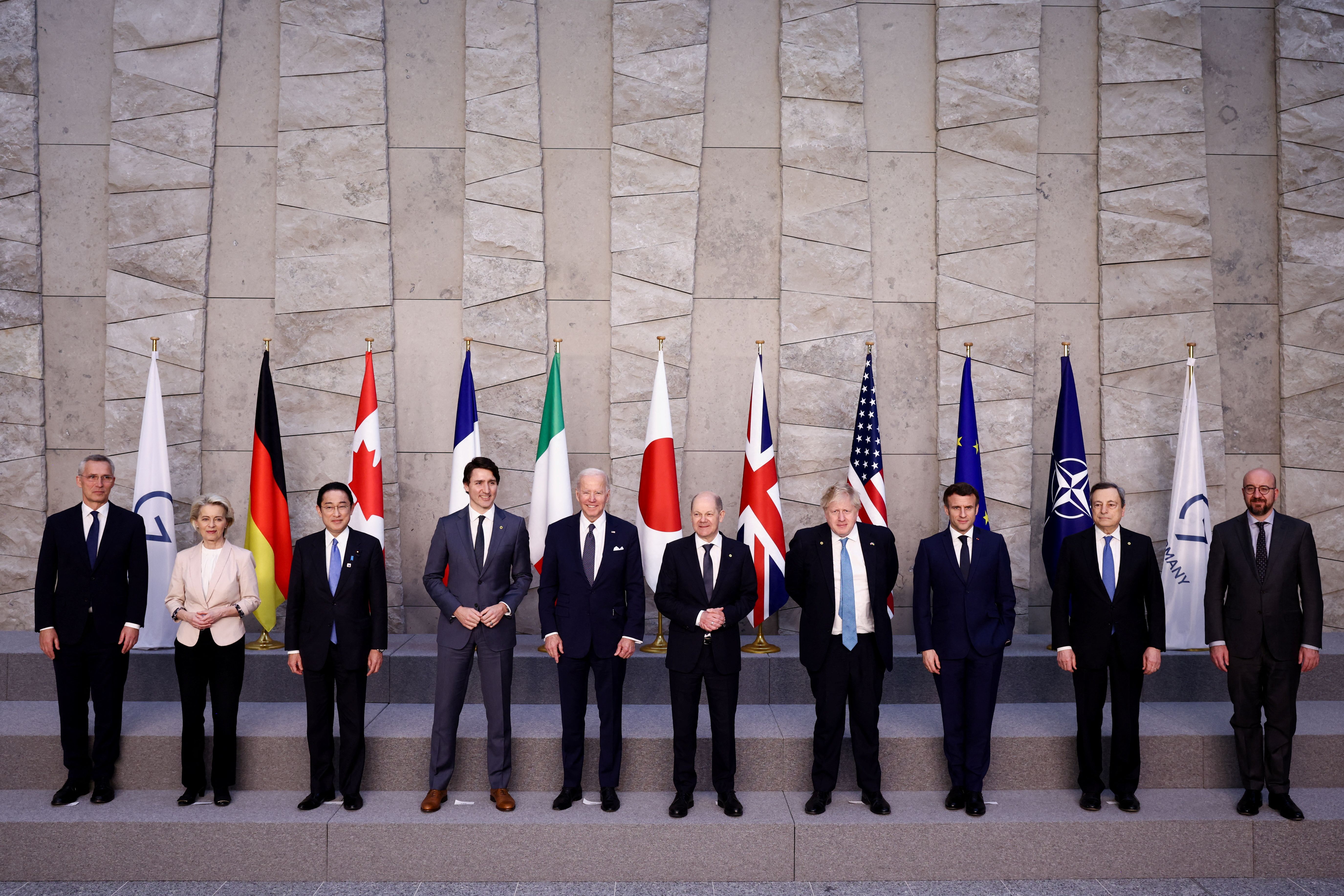
NATO Secretary General Jens Stoltenberg, European Commission President Ursula von der Leyen, Japan's Prime Minister Fumio Kishida, Canada's Prime Minister Justin Trudeau, U.S. President Joe Biden, Germany's Chancellor Olaf Scholz, British Prime Minister Boris Johnson, France's President Emmanuel Macron, Italy's Prime Minister Mario Draghi and European Council President Charles Michel, G7 leaders
Left to right: NATO Secretary General Jens Stoltenberg, European Commission President Ursula von der Leyen, Japan's Prime Minister Fumio Kishida, Canada's Prime Minister Justin Trudeau, U.S. President Joe Biden, Germany's Chancellor Olaf Scholz, British Prime Minister Boris Johnson, France's President Emmanuel Macron, Italy's Prime Minister Mario Draghi and European Council President Charles Michel pose for a G7 leaders' family photograph during a NATO summit at the alliance's headquarters in Brussels, Belgium, on March 24.

“There has been no communication with Moscow about these changes, nor is there a requirement to do that,” John Kirby, a spokesman for Biden’s National Security Council.

Biden announced on Tuesday after arriving for the summit that the U.S. would base two additional destroyers at its naval base in Rota, Spain, bringing the total number to six.

The U.S. currently has more than 100,000 servicemembers deployed across Europe, up by about 20,000 since just before Russian President Vladimir Putin’s invasion of Ukraine began four months ago.

Biden predicted that meetings this week would make for a “history-making summit” as leaders were set to approve a new strategic framework, announce a range of steps to boost their defense spending and capabilities, and clear the way for historically neutral Finland and Sweden to join NATO.

Biden said Putin thought NATO members would splinter after he invaded Ukraine, but got the opposite response instead.

“Putin was looking for the Finland-ization of Europe,” Biden said. “You’re gonna get the NATO-ization of Europe. And that’s exactly what he didn’t want, but exactly what needs to be done to guarantee security for Europe.”

Turkey, the last remaining holdout to approve the Nordic countries’ accession into NATO, reached an agreement on the eve of the summit late Tuesday to support adding them to the 30-nation alliance.

Joe Biden with European Leaders

While the White House said the U.S. was not a direct party to the negotiations, a senior administration official said Biden spoke with Turkish President Recep Tayyip Erdoğan on Tuesday to encourage him to clear the way for Sweden and Finland to join. The two leaders are set to meet Wednesday afternoon to discuss other issues, the White House said.

Biden will also sit down Wednesday with South Korean President Yoon Suk Yeol and Japanese Prime Minister Fumio Kishida, who are attending the NATO summit as the alliance looks to strengthen its ties in the Indo-Pacific region and address challenges from China.

The White House said the three leaders would also discuss North Korea’s nuclear and ballistic missile programs.

South Korea Launches First Satellite With Homegrown Rocket

DefenseNews: The launch made South Korea the world’s 10th nation to place a satellite into space with its own technology. It was South Korea’s second launch of a Nuri rocket.

outh Korea successfully launched satellites into orbit with its homegrown Nuri rocket on Tuesday
Seoul: South Korea conducted its first successful satellite launch using a domestically developed rocket on Tuesday, officials said, boosting its growing aerospace ambitions and demonstrating it has key technologies needed to launch spy satellites and build larger missiles amid tensions with rival North Korea.

North Korea Fired Short-range Missiles in 4th Launch this year

SEOUL, South Korea (AP) — North Korea fired two suspected ballistic missiles into the sea Monday in its fourth weapons launch this month, South Korea’s military said, with the apparent goal of demonstrating its military might amid paused diplomacy with the United States and pandemic border closures.

North Korea
South Korea’s Joint Chiefs of Staff said the North likely fired two short-range ballistic missiles from an area in Sunan, the location of Pyongyang’s international airport. The missiles were launched four minutes apart Monday morning and flew around 236 miles on a maximum altitude of 26 miles before landing in waters off the country’s northeastern coast, it said.

The U.S. Indo-Pacific Command said the missiles did not pose an immediate threat to U.S. personnel or territory, or to its allies, but highlighted the destabilizing impact of the North’s “illicit” weapons program. Japan’s Defense Minister Nobuo Kishi said the missiles landed outside the Japan’s exclusive economic zone, and the chief cabinet secretary, Hirokazu Matsuno, condemned North Korea’s actions as threats to peace.

US will work with India, Japan and South Korea to tackle threat from China: Senator Warner

Democratic Senator Mark Warner, Chairman of Senate Permanent Select Committee on Intelligence, in an interaction with members of the US India Security Council said China had emerged as a major problem for the US companies doing businesses in that country and intellectual theft was a big concern.


Mark Warner
The US will work with countries like India, Japan, and South Korea to tackle the threat of Chinese surveillance, a top American Senator, who has made a Congressional legislation to make New Delhi a strategic defence partner of Washington on a permanent basis has said.

Democratic Senator Mark Warner, Chairman of Senate Permanent Select Committee on Intelligence, in an interaction with members of the US India Security Council said China had emerged as a major problem for the US companies doing businesses in that country and intellectual theft was a big concern.

Warner, who is also co-chair of the Senate India Caucus, said he has sponsored an amendment to the National Defense Authorization Act (NDAA) act to make India a strategic defense partner on a permanent basis.

Send us a message

Story tips, corrections, questions or advertising enquiries: fill in the form and our team will reply by e-mail.

Newsletter

Stay Updated with Defense News

Get breaking defense and security news, analysis and exclusive reports delivered straight to your inbox.

Contact the newsroom

Have a defense story or an update to report?

Send us a news tip, a correction or a press release. Every message is read by our desk.